The Ethics of Genetic Engineering: CRISPR and Our Future
Genome editing technologies, especially CRISPR-Cas9, open up enormous possibilities for humanity — from treating hereditary diseases to creating resilient agriculture. At the same time, they raise deep ethical, social, and legal dilemmas. Should we use “genetic scissors” when the consequences may affect not only individuals but all of humanity, its diversity, and its future?
This article explores current achievements, potential risks, moral dilemmas, and ways for society to responsibly approach genetic engineering.
Order custom essay The Ethics of Genetic Engineering: CRISPR and Our Future with free plagiarism report
 450+ experts on 30 subjects
 Starting from 3 hours delivery
What CRISPR Is and the Current State of Science
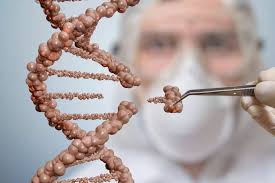
CRISPR-Cas9 is a technology that allows scientists to “cut out” segments of DNA and, if necessary, replace or remove them. This breakthrough makes precise gene editing much more efficient and easier than traditional methods.
CRISPR applications already show promise in several areas:
-
Medicine and gene therapy: treatment of hereditary diseases and potential correction of defects at early stages. For example, in 2020, children with beta-thalassemia and sickle cell anemia were successfully treated with CRISPR, eliminating the need for regular blood transfusions. In 2024, successful cases of treating amyloid neuropathy in adults were reported, significantly improving quality of life. Additionally, CRISPR has shown effectiveness in treating certain forms of inherited blindness, with patients experiencing early vision improvement.
-
Agriculture and biotechnology: creation of plants and animals resistant to diseases and environmental stresses, improving food security. For instance, gene editing in rice has produced drought-resistant varieties, and livestock has been bred with increased resistance to infections.
Currently, CRISPR is actively used in clinical trials as well as laboratory research, making it likely that its applications will expand significantly in the coming years.
Key Ethical and Social Risks
Even with promising results, CRISPR carries serious moral and practical risks:
-
Editing germline cells and heritable changes: gene corrections in embryos can affect future generations, making long-term consequences unpredictable.
-
Unintended mutations and genetic instability: there have been cases where CRISPR caused off-target DNA changes, potentially leading to new diseases.
-
Inequality of access and social disparity: if therapy is available only to the wealthy, it could deepen societal divides and create “genetic elitism.”
-
Ethical questions of identity, diversity, and “normalcy”: who decides which genes “need” correction and which do not? How will this affect the acceptance of individuals with unique traits?
-
Environmental and biological risks: editing animals, plants, or microorganisms could unpredictably affect ecosystems.
International scientists and bioethicists caution that while solving specific problems, we must not overlook global consequences.
Real Achievements and CRISPR’s Potential
CRISPR is not just a theoretical tool; it is already producing concrete results in medicine, biotechnology, and agriculture.
-
Precise correction of hereditary mutations:
Scientists have successfully used CRISPR to correct genetic defects in adult patients. For example, treatment of hereditary immunodeficiencies restored immune system function in children and adults previously prone to frequent severe infections. -
Fighting cancer:
In some clinical trials, CRISPR has been used to modify immune cells so they can more effectively attack tumors. Results show significant tumor reduction in patients with certain forms of leukemia. -
Developing resilient crops and livestock:
In agriculture, genome editing creates plants and animals resistant to diseases and environmental stresses. For instance, livestock shows increased disease resistance, while rice and wheat have enhanced drought tolerance. -
New approaches to rare diseases:
CRISPR allows researchers to create laboratory models of rare hereditary diseases, accelerating drug and therapy development. This paves the way for personalized medicine, tailoring treatment to the patient’s unique genetic profile. -
Advancing scientific research:
CRISPR accelerates experiments, reduces costs, and enables testing new therapies for complex diseases previously considered untreatable.
These examples demonstrate that CRISPR is no longer just a tool for future science: it is actively transforming real-world medical and biotechnological practices, creating opportunities that cannot be ignored.
Building Ethical and Legal Oversight: Guidelines and Principles
To minimize risks and make genetic engineering a responsible resource, the following principles are essential. The table below outlines key recommendations.
| Principle / Rule | Practical Implementation |
|---|---|
| Precautionary principle | Ban on editing germline cells until long-term consequences are fully understood; no “designer” interventions for appearance or non-essential enhancements. |
| Transparency and informed consent | Patients (and parents of future children) must have full access to risks, options, and alternatives; all experimental procedures require voluntary, well-informed consent. |
| Equal access to therapy | Access to gene therapy should not depend on financial resources — equitable distribution is essential to prevent social inequality. |
| International standards and legislation | Develop global regulatory principles, prohibit commercial “gene editing to order,” enforce strict clinical oversight and certification. |
| Monitoring consequences and long-term studies | Mandatory follow-up of patients and their offspring, registries, tracking effects over years, studying side effects. |
| Ethical education and public dialogue | Public awareness campaigns, open discussions involving bioethicists, medical professionals, and citizens — decisions must be conscious and collective. |
Where to Draw the Line Between Therapy and “Genetic Enhancement”
One critical question: where is the boundary between therapy (treating disease) and enhancement (improving human traits)?
-
Correcting hereditary diseases is a widely accepted medical limit.
-
Attempts to “enhance” humans (intelligence, physical abilities, appearance) raise ethical and social concerns: who decides what is “normal” and what is an enhancement?
Allowing unrestricted enhancement could lead to commercialization of “designer babies,” new forms of inequality, stigmatization, and discrimination.
Personal Perspective: Why Responsibility Matters
CRISPR is a chance to save thousands of lives, eliminate mutations, and improve the lives of families. At the same time, it is a tremendous responsibility toward the future — for children, society, and the natural world.
We cannot act recklessly, guided solely by the desire to “improve” humanity. Every step must be measured, transparent, and consider long-term consequences. Life, health, fairness, and equality should be our guiding values.
Conclusion
-
CRISPR technology is one of the most revolutionary achievements in biology and medicine; its potential is enormous, and initial practical successes already exist.
-
Alongside this are serious ethical, social, and biological risks.
-
Responsible use of these technologies requires international regulation, transparency, equal access, informed consent, and long-term monitoring.
-
Genetic engineering is not only a scientific issue but a question of human responsibility. Decisions we make today shape the future of generations to come.
Cite this Page
The Ethics of Genetic Engineering: CRISPR and Our Future. (2025, Dec 10). Retrieved from https://phdessay.com/the-ethics-of-genetic-engineering-crispr-and-our-future/
Run a free check or have your essay done for you