Empires and Ecology: How Growing Empires Transformed the Natural Environment
The history of humanity is not only a succession of conquests, wars, and cultural achievements. Great empires left an indelible mark not only on political and social life but also on the natural landscapes. As empires expanded their territories, they actively intervened in ecosystems, changing landscapes, deforesting areas, altering river courses, and reshaping agricultural practices. These ecological changes, often unconsidered in terms of long-term consequences, influenced the development of both the empires themselves and nature at large.
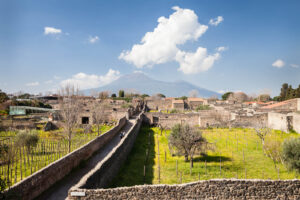 This essay is dedicated to analyzing how empires, from ancient times to the early modern period, impacted ecological processes and how these interventions shaped the surrounding environment. We will explore how these environmental changes helped and, at times, hindered the prosperity of empires, and what consequences these changes had for society and nature.
Ancient Empires: Resource Management and Early Ecological Consequences
Order custom essay Empires and Ecology: How Growing Empires Transformed the Natural Environment with free plagiarism report
 450+ experts on 30 subjects
 Starting from 3 hours delivery
Ancient civilizations created complex social structures dependent on natural resources. Egypt, Mesopotamia, Rome, and China provide examples of how economic needs of empires often came into conflict with the preservation of ecosystems.
Egypt: Managing Water Resources and Agricultural Revolution
One of the most striking examples of environmental manipulation is the activity of ancient Egypt, particularly in the field of irrigation and agriculture. The Nile River could not be controlled without active human intervention. Egyptians constructed numerous canals and dams to regulate flooding, which allowed for a significant increase in cultivated land. However, in the long term, this led to soil degradation due to overuse of irrigation systems and the deterioration of water quality.
Moreover, intensive agriculture led to deforestation and the disruption of local ecosystems in nearby areas, making recovery more difficult. Thus, the Egyptian model demonstrates a paradox: the attempt to control nature for ensuring stability simultaneously created new risks.
Roman Empire: Expansion and Exploitation of Forests
The Roman Empire presents another example of intervention — systematic exploitation of resources for construction and military needs. To build roads, aqueducts, fortifications, and cities, the Romans extensively deforested areas, which had a significant impact on local ecosystems. The economic rationale was clear: forests provided materials for building, fuel, and space for agriculture. But the consequences were complex: the reduction of forest cover altered the microclimate, increased the risk of erosion and flooding, and depleted lands, which reduced the availability of arable land.
The Roman example also illustrates the social aspect of environmental changes. The disruption of ecosystems led to a reduction in available land for small landowners, increasing social inequality and contributing to political instability. In other words, the ecological consequences of imperial expansion directly influenced societal structure.
Medieval Empires and Early Modern Interventions in Nature
With the advent of the Middle Ages and the Early Modern period, the scale of environmental interventions grew. Population growth, urban development, and expanding trade networks put more pressure on natural resources, and new technologies allowed for more intensive use.
China: Forest Management and Agriculture
During the Tang and Song dynasties in China, large-scale transformations of natural resources took place to support the growing population. Deforestation for agriculture, construction, and transportation infrastructure was widespread. At the same time, agricultural innovations were introduced: crop rotation systems, irrigation channels, and the introduction of new crops, all of which helped compensate for the loss of natural ecosystems and maintain agricultural productivity.
China’s example shows that technological and institutional development could partially mitigate ecological consequences. However, the balance remained fragile: excessive exploitation of land led to soil degradation, flooding, and erosion, which ultimately reduced the effectiveness of the agrarian economy and threatened the stability of the state.
European Colonies: Transforming the Ecosystems of the New World
Colonial empires, starting in the 15th century, radically altered the natural environment of the Americas. Deforestation of tropical forests, the establishment of plantations for sugarcane, coffee, and tobacco, as well as the introduction of new plant and animal species, led to large-scale reshaping of landscapes. Environmental changes were accompanied by social consequences: the disappearance of indigenous cultural practices, changes in diet, and displacement of populations.
Particular attention should be paid to the impact on biodiversity: many species of plants and animals were either driven to extinction or displaced. However, colonial powers often viewed land merely as a resource, overlooking the long-term consequences for ecosystems and local populations.
Long-Term Consequences of Imperial Environmental Transformations
The environmental changes caused by empires had multifaceted consequences. They affected not only nature but also society, economy, and political stability.
1. Soil Degradation and Agriculture
Intensive agriculture and deforestation led to soil degradation in many regions. In Rome, China, and Mesoamerica, land exhaustion diminished productivity, forcing empires to seek new territories or adjust agricultural practices. Soil degradation was one of the hidden factors of economic weakness, which only became apparent after decades or even centuries.
2. Environmental Catastrophes and Social Crises
Unchecked changes in the landscape could lead to catastrophic consequences. For example, the Mayan civilization faced a combination of deforestation and soil exhaustion, exacerbated by climate changes and droughts. Such environmental pressures contributed to the fall of cities and the breakdown of political structures. Similarly, the later Roman Empire struggled with the restoration of fertile land, leading to economic crises and social unrest.
3. Lessons for the Present
History shows that the rise of empires has almost always been accompanied by changes in the environment. These processes highlight the interconnectedness between human activity and long-term societal sustainability. Today, we observe similar patterns: overexploitation of resources, deforestation, and disruption of water systems have multifaceted impacts on the economy, social structure, and climate.
Key Takeaways
-
Growing empires systematically altered natural ecosystems through deforestation, land reclamation, and construction of infrastructure.
-
The ecological consequences were long-lasting, affecting not only nature but also social and economic stability.
-
Examples from history, including Egypt, Rome, China, and colonial territories in the Americas, show that human intervention in nature could either facilitate prosperity or lead to crises.
-
The environmental consequences of empires directly influenced societal structure, economics, and political stability.
Conclusion
The environmental impact of empires is an integral part of civilizational history. Ecological transformations brought about by agricultural expansion, deforestation, and river course modifications shaped living conditions, economic opportunities, and societal structure. Studying these processes helps us understand how human activity impacts nature and emphasizes the need for considering environmental consequences in modern resource management. Understanding the history of human interaction with the natural world allows us to avoid repeating past mistakes and provides a foundation for sustainable development in the future.
Cite this Page
Empires and Ecology: How Growing Empires Transformed the Natural Environment. (2026, Jan 24). Retrieved from https://phdessay.com/empires-and-ecology-how-growing-empires-transformed-the-natural-environment/
Run a free check or have your essay done for you